


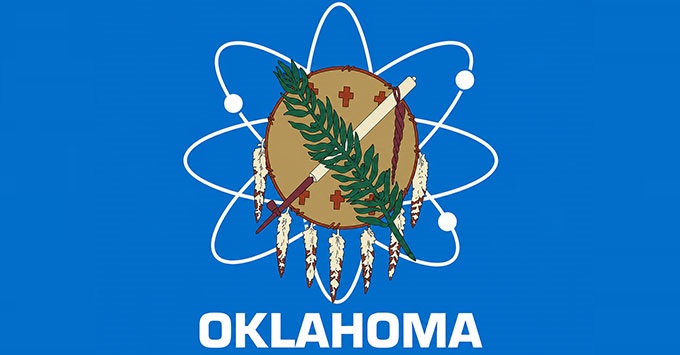
Washington D.C. – Oklahoma is one of five states selected by the U.S. Department of Energy to continue exploring the development of a Nuclear Lifecycle Innovation Campus, a project state leaders say could bring billions in investment, thousands of high-paying jobs, and position Oklahoma at the forefront of America's next generation of energy production.
The Department of Energy recently announced Oklahoma, Utah, Tennessee, Louisiana, and Idaho as potential host states after reviewing 28 applications from 26 states. The proposed campuses are designed to strengthen the nation's nuclear fuel supply chain while supporting activities such as fuel fabrication, uranium enrichment, advanced manufacturing, nuclear reactor deployment, and power generation.
The selection does not guarantee Oklahoma will receive a campus, but it advances the state into the next phase of discussions with the Department of Energy.
State Rep. Nick Archer, R-Elk City, said the opportunity aligns with Oklahoma's long history of solving America's energy challenges.
"I'm excited," Archer said. "The state of Oklahoma has built its economy solving problems and this opportunity is no different. If we are ultimately selected, national labs generate billions of dollars into their parent state's economy. That means new workforce pipelines for engineers, scientists, skilled lab technicians, those types of things. Positions Oklahoma doesn't currently have to offer my kids and our grandkids."
Archer said the project represents more than economic development. He believes it would help keep future generations of Oklahomans in the state by creating career opportunities in science, engineering, and advanced technology.
"And so I'm excited," Archer continued. "Oklahoma has a chance not just to lead in oil and gas production, but to also lead America's next generation of energy innovation."
Gov. Kevin Stitt also welcomed the announcement, calling it "a new frontier" for Oklahoma's energy industry. He said the state has long been a leader in oil and natural gas production and now has the opportunity to add nuclear energy to its growing portfolio.
According to the Department of Energy, a Nuclear Lifecycle Innovation Campus could attract up to $50 billion in capital investment, generate as much as $10 billion in state and local tax revenue, and create nearly 25,000 jobs once fully established.
The proposed campuses would support the entire nuclear fuel lifecycle, including fuel fabrication, enrichment, reprocessing of used nuclear fuel, final fuel disposition, advanced manufacturing, and potentially advanced reactor deployment and data centers.
The five selected states will continue working with the Department of Energy to evaluate potential sites and negotiate future hosting agreements before any final locations are chosen.
Copyright 2026 Paragon Communications. All rights reserved. This material may not be published, broadcast, rewritten, or redistributed without permission.



.jpg)